Are Elephant Sanctuaries in Thailand Ethical? An Honest Answer
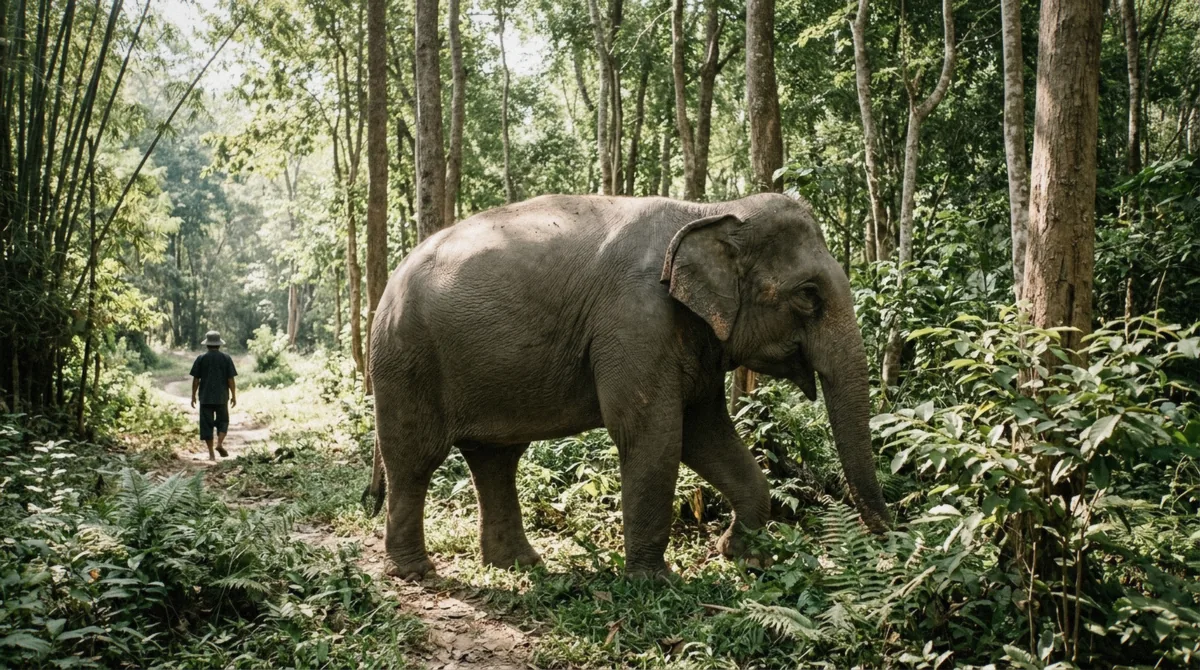
Are elephant sanctuaries in Thailand ethical? Some genuinely are, and just as many that use the word are not. World Animal Protection's January 2026 report found 69% of Thailand's 2,849 captive tourism elephants still live in poor or unacceptable conditions, with only 5% in the best-possible category. I've guided small groups to these sanctuaries since 2014, walked out of the bad ones, and hold every camp on this site to the same no-riding, no-show standard. Below: what the numbers actually say, how to tell a real sanctuary from a camp wearing the word as marketing, what our featured tours do differently, and who shouldn't book at all.
Quick answer
Some Thai elephant sanctuaries are genuinely ethical, and most venues in the country still fail basic welfare checks. World Animal Protection's 2026 assessment of 236 venues found 69% of elephants in poor or unacceptable conditions; the deciding factor isn't the word "sanctuary" on a sign, it's whether the operator bans riding, shows and chaining, which is the standard every tour featured on this site meets.
Key takeaways
- 69% of Thailand's 2,849 captive tourism elephants live in poor or unacceptable conditions; only 5% enjoy best-possible conditions
- "Sanctuary" is an unregulated word in Thailand; check practices, never the branding
- The clear red line: riding, shows and tricks. No credible welfare organisation endorses any of them
- Observation-only is the gold standard; supervised feeding and mud-bathing sits in an honest middle ground
- All six tours featured here are no-riding, no-performance operators; Bangkok Elephant Park runs without chains or hooks
- Restrictions apply: children under 4-5, limited mobility, and severe animal allergies are excluded on safety grounds, not welfare grounds
What the Numbers Say
World Animal Protection's "Bred to Entertain" report, published on January 12, 2026 with fieldwork conducted between February 2024 and January 2025, assessed 236 venues across Thailand housing 2,849 elephants. The findings are stark: 69% of those elephants live in poor or unacceptable conditions, and only 5% enjoy best-possible conditions, a figure that has barely moved since the organisation's previous assessment in 2019.
- More than half of assessed elephants were kept on short chains during the day
- Only about a quarter could interact freely with other elephants, unchained
- The proportion in the worst welfare category has remained nearly unchanged since 2019, despite years of "sanctuary" rebranding across the industry
Read that carefully: the report is not saying most sanctuaries are fake. It's saying most captive elephant venues in Thailand, many of which now use sanctuary-adjacent language in their marketing, still fail on chaining, space and freedom of movement. The word on the sign tells you nothing; the report is the closest thing to an independent audit this sector has.
| Welfare measure | Share of assessed elephants |
|---|---|
| Poor or unacceptable conditions | 69% |
| Best-possible conditions | 5% |
| Kept on short chains during the day | More than half |
| Free to interact with other elephants, unchained | About a quarter |
Why Riding Is Off the Table
Elephants used for riding in Thailand's tourism industry have historically been broken into submission through a training process sometimes called the crush, using restraint, food deprivation and pain to make a wild-tempered animal accept a rider and a mahout's commands without resistance. That history doesn't disappear because an elephant is now marketed as calm and friendly; it's the reason welfare organisations, including World Animal Protection, treat riding, shows and tricks as an unambiguous red line rather than a matter of degree.
This is the one part of the ethics conversation where there is genuinely no credible middle ground. A camp that offers riding or a show, no matter how it markets the animals' living conditions otherwise, sits outside what any recognised welfare body considers acceptable. None of the six tours featured on this site offer riding, shows or tricks of any kind.
It's worth naming why this standard holds even when a riding camp looks calm and well-run from the outside. An elephant that appears docile enough to carry a howdah or a bareback rider without visible distress is not evidence the animal was never trained through coercive methods; calm compliance is often the intended end result of that training, not proof it never happened. Judging a camp by how relaxed the elephants look in the moment is exactly the trap that lets riding operations keep marketing themselves as gentle and elephant-friendly.
How to Tell an Ethical Sanctuary From a Camp
"Sanctuary" carries no legal definition in Thailand, so the name on the sign proves nothing. Thailand's captive elephant sector is underregulated, meaning the real work of vetting an operator falls on the visitor, not on any licensing body. These are the practices that actually separate a genuine sanctuary from a camp using the word as marketing.
- Green flags: no riding under any circumstance, no shows or tricks, limited group sizes per elephant, elephants free to walk away from visitors, visible mahout supervision throughout every interaction
- Red flags: bull hooks or ankuses visible or in use, chains left on display even if not currently restraining movement, painting or ball-throwing performance tricks, any guarantee of "constant contact" with an elephant regardless of the animal's own behaviour that day
A useful rule of thumb: if a listing promises you will definitely touch, feed or bathe an elephant no matter what, rather than describing a supervised session where the elephants participate on their own terms, that's a marketing promise the animal never agreed to.
The Honest Middle Ground on Feeding and Bathing
It's worth being straight about where feeding and mud-bathing sit on the welfare spectrum, because this site's tours all offer both. Observation-only, watching elephants from a distance with zero physical interaction, is what World Animal Protection and most welfare organisations treat as the true gold standard, since it asks nothing of the animal beyond simply existing in its own space.
Supervised feeding and mud-bathing sits in an honest middle ground below that. Advocates of this model argue it's a humane alternative to riding camps: elephants are never restrained for it, can walk away, and the sessions mirror natural feeding and bathing behaviour rather than performance. Observation-only advocates counter that any format promising visitors reliable contact requires a managed routine that constrains an elephant's day more than pure observation would.
Both views are legitimate, and this site does not pretend the tours it features sit at the very top of the welfare ladder; they sit well above riding and show camps, and meaningfully below observation-only sanctuaries that don't offer any contact at all.
In practice, the elephants at these six sanctuaries are not on a fixed feeding-and-bathing schedule dictated purely by tourist demand; sessions are grouped and mahout-paced, and an elephant that shows no interest in a given session is left alone rather than coaxed in. That's a meaningfully different model from a camp that guarantees every visitor a bathing photo regardless of what the animal wants to do that hour, and it's the practical test worth applying anywhere you're considering booking, not just here.
How the Tours on This Site Handle It
Every tour featured on this site is a no-riding, no-performance operation, and the specific ethics-relevant practices differ slightly by sanctuary.
- Living Green Elephant Sanctuary, Suphanburi: feeding and mud-bathing only, no riding, no chains during visitor sessions, mahout-supervised throughout
- Bangkok Elephant Sanctuary, Pathum Thani: no-riding policy stated plainly, elephants never chained during the tour, small-group format
- Bangkok Elephant Park, Pathum Thani: elephants live without chains or hooks on the property, one of the clearer welfare commitments among these six operators
- Elephant Jungle Sanctuary, Pattaya: strict no-riding policy, contact limited to walking among the herd, fruit feeding and watching mud baths
- ElephantsWorld, Kanchanaburi: runs a riverside "we work for the elephants" model caring for old and rescued animals, about 126 km from Bangkok
- Sanctuary & Erawan Waterfall tour, Kanchanaburi: same no-riding sanctuary practices in the morning, paired with an unrelated national park swim in the afternoon
Across every one of these, the same visitor-side rules apply: no flash photography, no approaching an elephant without mahout guidance, no strong perfume or sprayed insect repellent near the animals, and feeding only during supervised sessions rather than whenever a visitor feels like it.
Who Shouldn't Book: Restrictions at a Glance
These restrictions come directly from the six operators' own booking terms, not from any welfare policy. Ask before booking if any of the following applies to you or your group. Traveling as a family?
The age-by-age advice for sanctuary visits with children covers every tour's minimum in detail.
| Restriction | Typical rule on these tours | Why |
|---|---|---|
| Children, minimum age | Under 4 excluded on Living Green and the Pattaya half-day; under 5 excluded on the other four tours | Sessions require following mahout instructions closely and staying calm near a large animal |
| Mobility limitations | Not suitable for travellers with severe mobility limitations | Sanctuary terrain is uneven forest and riverbank with no paved paths |
| Severe animal allergies | Not suitable for those with severe allergies to animals | Close-contact feeding and mud-bathing sessions bring visitors within arm's reach of the elephants |
| Fear of large animals | Best avoided if you're uncomfortable near large animals up close | The core activity is direct, close-range interaction, not a distant viewing experience |
| Pregnancy | Not stated as a blanket exclusion by these operators, but the mud-bath and riverbank terrain warrant asking directly before booking | Uneven, sometimes slippery ground and a full day outdoors in heat |
Rules Visitors Must Follow
Every one of the six tours enforces the same core rules on site, and they exist for the elephants' welfare, not visitor convenience.
- No flash photography at any point, since sudden bright light distresses elephants
- No approaching or touching an elephant without mahout guidance
- No strong perfume or sprayed insect repellent near the animals; apply before arrival instead
- No outside food brought for the elephants beyond what's provided in supervised feeding sessions
- No loud noise or sudden movement around the herd
Frequently Asked Questions
Is bathing with elephants cruel?
Not inherently, when it's supervised, the elephant can walk away, and there's no restraint involved. It sits below pure observation-only on the welfare spectrum, but well above any riding or show camp. See the honest middle-ground section above for both sides of this debate.
Are baby elephant photos okay?
Only if the interaction follows the same rules as adult elephants: no forced posing, no separation from the mother for the photo, and mahout supervision throughout. A baby elephant paraded for solo photo ops away from its herd is a red flag regardless of how the venue markets it.
What is the crush?
A historical training method used to break a wild-tempered elephant into accepting a rider or mahout commands through restraint and deprivation. It's the reason welfare organisations treat riding as an unambiguous red line rather than a judgment call; see the riding section above.
Do sanctuaries buy elephants, and does that encourage more captive breeding?
Some do acquire elephants from retiring logging or riding operations, which welfare groups generally view as a net positive exit from worse conditions, though it doesn't reduce the total captive population on its own. It's a fair question to ask any operator directly before booking.
Can elephants at these sanctuaries be released to the wild?
Realistically, no. Elephants born and raised in captivity generally lack the skills for wild survival, and Thailand's shrinking wild habitat limits release options regardless. The honest goal of a good sanctuary is the best possible captive welfare, not eventual release.
Is it safe for someone with a heart condition or high blood pressure to visit?
These tours don't involve strenuous exertion, but the heat, uneven terrain and a full day outdoors are real factors. Talk to your doctor before booking a 10 to 12 hour day if you have a relevant condition.
Most Thai elephant venues still fail basic welfare checks, and a genuine handful, including the operators featured on this site, do not. The word on the sign proves nothing; the practices do. Check for the green flags above before you book anywhere, not just here, and you'll land somewhere your money is actually doing what it claims to.
For the real costs behind an ethical day trip, see our cost breakdown, and for the fuller worth-it case including the honest downsides of a long day on the road, see our worth-it guide. Compare all six no-riding sanctuary tours near Bangkok on our homepage before you decide. One practical footnote: the cool season from November to February (21 to 32°C) is both the easiest time to visit and the busiest at the well-run sanctuaries, so book the morning slot early.